2025
BHRS Office of Diversity and Equity Wins 2025 Countywide Dance-Off!
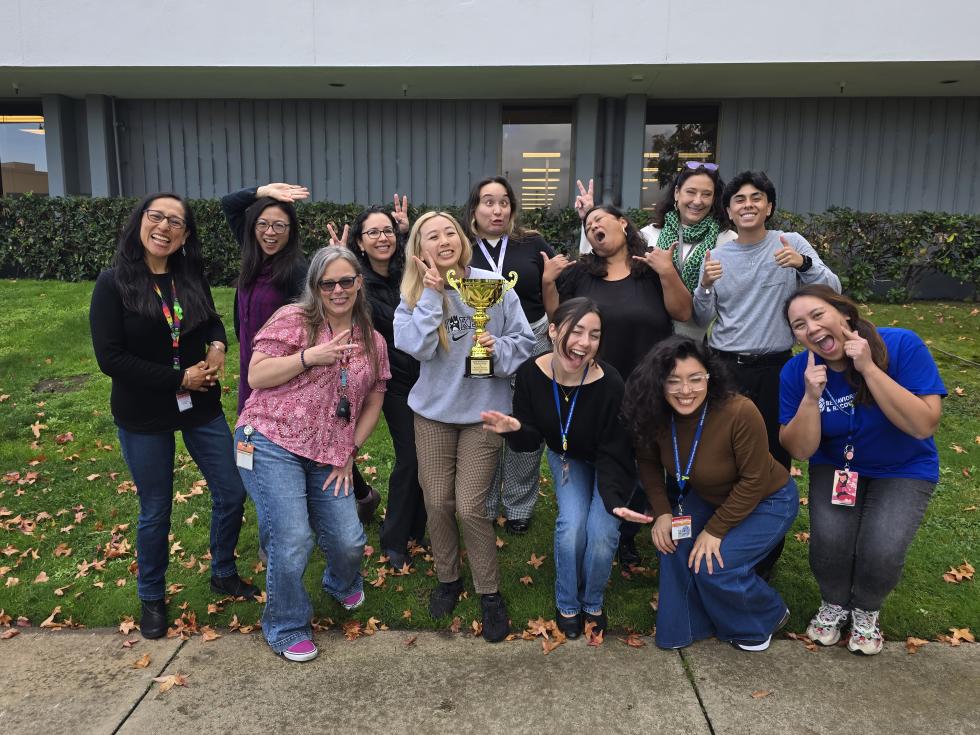
The BHRS Office of Diversity and Equity (ODE) proudly danced their way to victory in the 2025 Countywide Dance-Off Video Competition, earning the first-ever Dance-Off Trophy under the team name “Keeping It ODE School.” With creativity, rhythm, and infectious joy, the team stood out for their spirit, teamwork, and commitment to inclusivity.
What made this win especially meaningful was ODE’s intentional focus on accessibility. The performance was thoughtfully designed to be ADA-accessible, ensuring that staff of all abilities could participate fully and comfortably. This approach reflects BHRS’s core values of equity, belonging, and inclusion, demonstrating that celebration and accessibility can, and should, go hand in hand. By modeling inclusive practices even in moments of fun, ODE reinforced that equity is not just a policy commitment, but a lived value.
Beyond the dance floor, the competition served as an important reminder of the role staff wellness plays in sustaining our workforce. In behavioral health, we dedicate ourselves daily to supporting the well-being of others. Creating space for joy, movement, and shared laughter strengthens morale and fosters a deeper sense of connection among colleagues. The dance-off offered an opportunity to step outside of traditional roles, build relationships across teams, and celebrate the creativity and energy that make BHRS such a vibrant community.
As the inaugural trophy holders, “Keeping It ODE School” hopes to inspire even more BHRS teams to participate next year. The Countywide Dance-Off is more than a friendly competition, it is a celebration of wellness, teamwork, and the power of community. Congratulations to ODE for setting the standard for joy, inclusion, and connection, one dance step at a time.
Centering Community Voice: ODE’s 2025-2026 Photovoice Impact
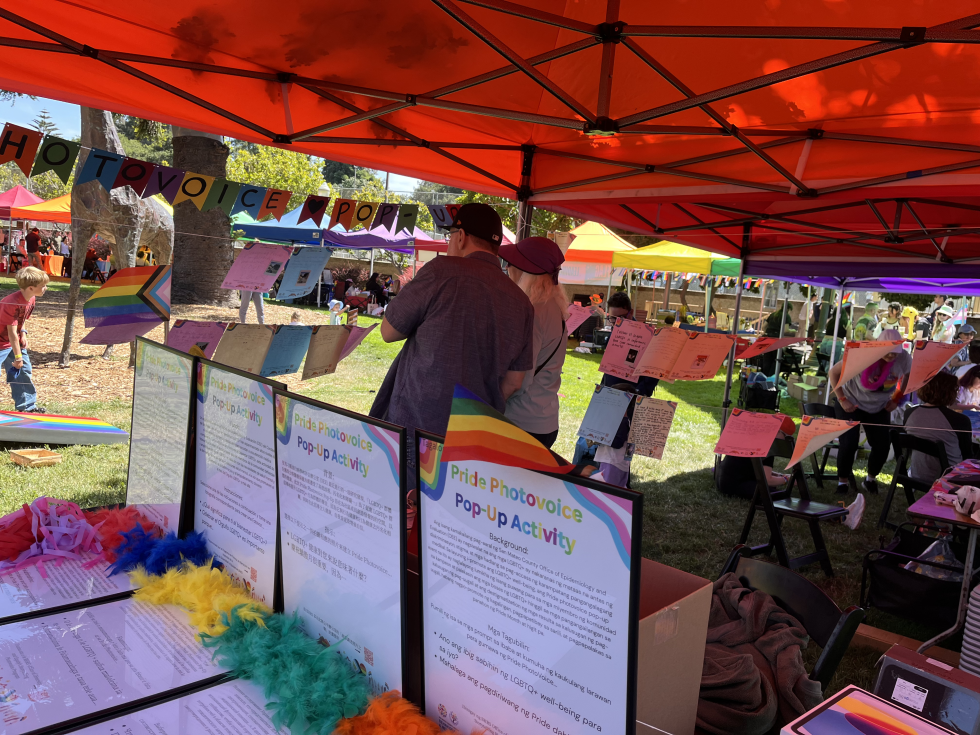
In 2025–2026, Behavioral Health & Recovery Services (BHRS) Office of Diversity & Equity (ODE) advanced community voice and equity-centered storytelling by hosting seven Photovoice opportunities, including two innovative pop-up events and two Spanish-language series, resulting in 93 completed Photovoices. These efforts deepened authentic engagement with residents and amplified lived experience as a driver of system transformation.
ODE introduced the first-ever Photovoice Pop-Up at the June 2025 San Mateo County Pride Celebration, creating an accessible, real-time opportunity for LGBTQ+ community members and allies to share reflections on belonging, safety, and behavioral health. This was followed by a second pop-up at the Housing Hero Awards (October 2025), highlighting the intersection of
housing stability and wellness. Both pop-ups reduced barriers to participation and demonstrated how storytelling can occur beyond traditional workshop formats.
In alignment with BHRS’s commitment to linguistic access and cultural responsiveness, ODE facilitated two Spanish-language Photovoice series, expanding participation among monolingual Spanish-speaking residents and ensuring that community narratives reflect the diversity of San Mateo County.
Beyond engagement, Photovoice created space for healing for both workforce and community participants. The process invites reflection, validation, and connection, allowing individuals to name experiences of resilience, inequity, hope, and growth. For community members, sharing their stories in supportive settings fosters empowerment and belonging. For staff and workforce participants, engaging in storytelling strengthens empathy, cultural humility, and collective understanding. The public displays further reinforce dignity and visibility, affirming that lived experience is valued expertise within BHRS.
ODE elevated community voices by displaying Hispanic Heritage Photovoices at Sana Sana, showcasing previous Housing Photovoices at the Housing Hero Awards, and presenting HAP Photovoices at HAP graduation. Collectively, these 93 Photovoices reflect BHRS’s Transformation Journey, centering equity, healing, and community wisdom to inform policy, outreach, workforce development, and sustainable systems change.
A National First: Advancing Cultural Humility in BHRS
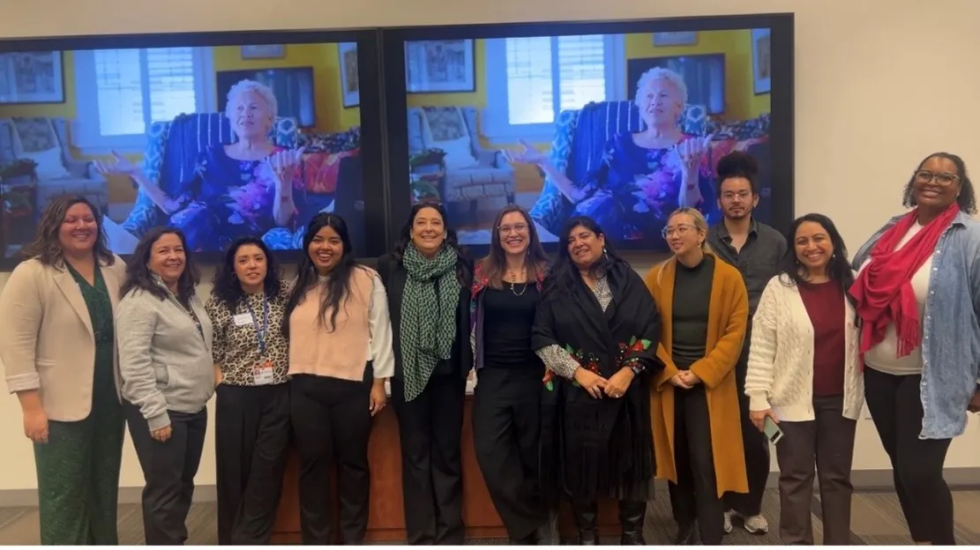
In 2025, San Mateo County Behavioral Health and Recovery Services (BHRS) launched its first pilot of Cultural Humility 102—recognized by Dr. Melanie Tervalon, co-founder of the Cultural Humility framework, as the first training of its kind nationally. Cultural Humility 102 was developed in direct response to staff voice. Colleagues consistently shared that they wanted more than an introduction; they sought practical tools to bring Cultural Humility to life in their work, relationships, leadership, and daily interactions.
This advanced training deepens practice by emphasizing real-world application, organizational culture, and examination of power dynamics. It strengthens accountability at both individual and institutional levels and features exclusive video reflections from Dr. Tervalon on the evolution and future of the framework. We extend our appreciation to the Cultural Humility 102 Planning Committee for designing a training grounded in insight, care, and intentionality.
Due to strong interest and meaningful impact, Cultural Humility 102 will launch as a formal training in early 2026. Its first formal session will coincide with a major milestone: BHRS’ 100th Cultural Humility 101 training. This achievement reflects years of sustained commitment to building a workforce rooted in reflection, respect, and culturally responsive care.
Cultural Humility remains one of BHRS’ foundational and mandated trainings, supporting lifelong learning, recognition of power imbalances, and authentic partnership with the diverse communities we serve. This work is central to effective behavioral health care and aligns deeply with the BHRS Transformation Journey, Multicultural Organizational Development (MCOD),
and Targeted Strategies 4.0 (TS 4.0). We extend sincere gratitude to the Cultural Humility 101 training cohort whose dedication has helped embed Cultural Humility into everyday practice across BHRS.
Know the Signs in Action: Community-Driven Suicide Prevention in San Mateo County
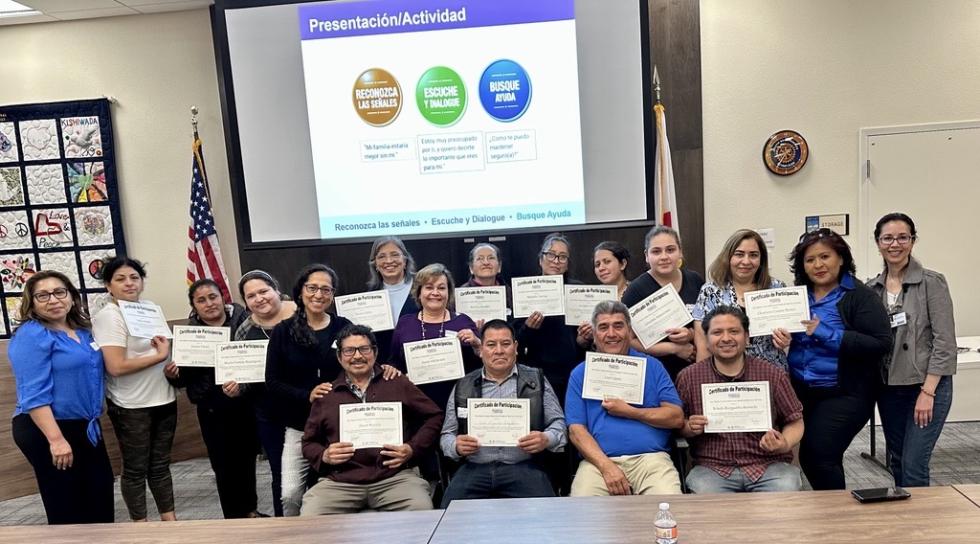
In 2025, the Behavioral Health and Recovery Services Health Ambassador Program delivered 30 Reconozca las Señales (“Know the Signs”) suicide prevention workshops across San Mateo County, presenting in nine cities. Together, these efforts reached hundreds of residents in schools, community centers, faith spaces, and neighborhood settings.
Prior to the launch of this suicide prevention series, 16 Health Ambassadors were trained to lead Spanish-language suicide prevention workshops, reaching 390 Spanish-speaking community members.
The impact is measurable. After participating:
- Belief that suicide is preventable increased from 71% to 94%.
- Comfort discussing suicide rose from 59% to 89%.
- Knowledge of crisis resources like 988 and 211 nearly doubled.
- 96% learned helpful conversation skills.
- 95% felt culturally included and respected.
One Health Ambassador reported that the skills gained enabled them to directly support six individuals experiencing suicidal ideation. Others have shared similar stories of intervening during moments of crisis and connecting people to care. As one participant reflected, “For six years, I struggled to help my daughter with anxiety. Today, I finally learned a way to talk with her.”
In a county where suicide remains a serious public health concern, particularly for youth, men/boys, LGBTQ+ residents, and communities facing stigma or isolation, this work matters. When one person learns to recognize, respond, and refer, they can change the life of another. Prevention becomes personal. And community becomes the solution.
Other key events in 2025
Successfully completed the final HAP-Y cohort; advanced community engagement through the Pacific Islander Initiative and data presentation to better understand community needs; achieved 83% contractor participation across HEIs; launched the first MCOD Pilot Steering Committee; HAP supports test calls and assists in maintained compliance; HEIs completed work plans and initiating strategic plans aligned with BHSA and the BHRS Transformation Journey; hosted three Spanish Parent Project classes (47 graduates, 56 community members reached); celebrated HAP Graduation surpassing 100 Ambassadors; chaired the cross-county Statewide Language Justice Workgroup; the WET team supported Suicide Assessment clinical training; launched Be Sensitive, Be Brave (BSBB) adaptations for the Black/African American community and middle schools (pilot completed); initiated mental health workshop development for elected officials; and launched Critical Conversations Training.